Friday, January 21, 2011

What Was All the Gossip About?

Now that some of the furor over Julian Assange and WikiLeaks has calmed down, it helps to untangle even a small strand of the web of intrigue surrounding the release of U.S. diplomatic cables. One of the themes we heard these past several months was that most of the cables are mere cocktail party "gossip." This phrase is often used to downplay their significance and to denigrate any public value WikiLeaks may provide as a safe harbor for whistleblowers.

Thus we see similar headlines all over the world: "Wikileaks 'Gossip' Merely Annoying in Latin America," Mario Osava, Inter Press Service, Dec. 13, 2010; "Good Gossip, and No Harm Done to U.S.," Albert R. Hunt, Bloomberg News, Dec. 5, 2010, syndicated in the New York Times; "Raila [Odinga] dismisses WikiLeaks reports as gossip," Carol Gakii and Kendagor Obadiah, Kenya Broadcasting Corporation, Dec. 10, 2010; "WikiLeaks: Gossip on a global level," Rabia Ashfaque, Express Tribune Pakistan Blog, circa Dec. 10, 2010; "WikiLeaks: Much ado over idle chat," Korea Herald editorial, Dec. 17, 2010.

So where did this idea come from? Why has it crystallized in so many minds as a convenient explanation? The "gossip" diagnosis is portrayed as the commonsense response, and this alone is reason to beware. We live in an era of information warfare, marked by proliferation of secrecy and the agents who sustain it. Common sense is no longer credible when it can be so easily provided by a third party.

Take for example the CIA Red Cell Memorandum entitled "Afghanistan: Sustaining West European Support for the NATO-led Mission—Why Counting on Apathy Might Not Be Enough," a document leaked to WikiLeaks in early 2010. The first section pretty much sums it up: "Public Apathy Enables Leaders to Ignore Voters." It is painful to witness such brash condescension for the democratic values our troops die to protect, and it is pathetic how the CIA values apathy as a means to sustain an unpopular policy. Only a pathological detachment from life and death consequences could allow them to uphold this charade.

And for those moments when apathy is not enough and war opposition becomes real, the Red Cell Memo suggests a handful of tactics for massaging European publics, tailored to the unique cultural weaknesses of each nation.

The mission’s "multilateral and humanitarian aspects" are recommended as key selling points for German audiences, and a dose of fear is thrown in for good measure: "messages that illustrate how a defeat in Afghanistan could heighten Germany’s exposure to terrorism, opium, and refugees might help to make the war more salient to skeptics."

The French media strategy calls for stirring up guilt related to civilians and women: "The prospect of the Taliban rolling back hard-won progress on girls' education could provoke French indignation, become a rallying point for France's largely secular public, and give voters a reason to support a good and necessary cause despite casualties." The irony wafts like smoke from a Gauloise when we consider the controversy over headscarves in French public schools.

But the real sneakiness here is the way that ethical values are used to legitimize continuation of the war. Of course everyone wants Afghan women and children to live happy, safe, and fulfilling lives. But good news in the service of a democratically disfavored policy sows confusion and helps apathy proliferate. Policy Innovations, in fact, has run great articles over the years on Afghan women, children, and education because it's our business to tell success stories of innovation in development. And that's exactly where the CIA logic breaks down: There are women and children who need good health and education all over the world. Just because some of them happen also to be in Afghanistan doesn't mean that the United States and its allies can retroactively justify a 10-year occupation based on their fates.

This CIA memo preceded the diplomatic cable release but it speaks to a major issue that WikiLeaks has brought to the surface: We can't go on conducting international diplomacy with hypocrisy, cynicism, and dissimulation as if somehow people of different nations live on different planets and aren't listening. Or as Slavoj Zizek writes in the London Review of Books, "We can no longer pretend we don’t know what everyone knows we know." An age of appearances is over.

PHOTO CREDIT: Paco Rives Manresa (CC).

Tuesday, January 11, 2011

Living Like a Refugee Is Not Easy

I had the luck to catch the Sierra Leone Refugee All Stars band last night in Manhattan. They formed in the refugee camps during the civil war of the 1990s, using their musical talents to stay alive and keep spirits high. They have since toured all over the world spreading their bright positive sound, which draws on a mix of influences from reggae to Nigerian high-life and American rap.

A pair of documentary filmmakers captured their story, and the band today leverages its success to help Sierra Leone recover and develop. When times are tough you have to dance, dance, dance.

Thursday, December 9, 2010

Reinventing the Wheelchair

Reading Scientific American this morning I spied the innovation that won their annual World Changing Ideas Video Contest: the Leveraged Freedom Chair designed by MIT Mobility Lab.

It's a three-wheeled human-powered wheelchair that goes faster than normal and also navigates difficult terrain—rutted roads, cobblestones, trash-strewn slums. The genius resides in the vertical hand levers: Users simply grab higher or lower depending on how much torque or speed they need. It's like being able to change gears.

The drivetrain consists of common bicycle parts and so is "manufacturable and repairable anywhere in the developing world," according to MIT. Sometimes low-tech solutions are the most appropriate.

Wednesday, November 24, 2010

Introducing: More Like This

Policy Innovations is pleased to announce the debut of "More Like This," a new article series by our friend John Haffner. John will be profiling clean energy leaders and other green innovators in China over the next several months.

As you can read in his introduction to the series, the motivation is triple: 1. Give these pioneers some of the recognition they deserve; 2. Convey the flavor of life in contemporary China; and 3. Inspire similar leadership in others.

The first article is a frank discussion with Kongjian Yu, an award-winning landscape architect whose designs strive to incorporate energy efficiency and natural beauty.

Yu feels that China's rapid urbanization suffers from what he calls the "'little feet' aesthetic"—showcase buildings built on shaky conceptual foundations. "These ornamental buildings can't carry their own weight. We have little feet but a jumbo body of consumption and GDP growth. Chinese have this dream of being urbanized. But the buildings aren't green."

Also of note on U.S.-China relations is our coverage of "Rare Earths Diplomacy" by Sean Daly. He looks at what we should expect in the rare minerals market and how it could impact production of the wind turbines and hybrid cars we associate with a clean technology economy.

Enjoy, and have a great Thanksgiving.

Thursday, November 4, 2010

Moving to the Japan Society in NY

Dear Friends,

As some of you know, I am leaving Carnegie Council next week to take a senior program position at the Japan Society in New York.

It was a tough decision to leave Carnegie—especially after nearly 5 years of exciting programming and research projects with a fantastic team. Ultimately my decision was formed by a personal desire to help Japan revive.

Over the course of a decade of writing seriously about Asia, my analysis has zeroed in on two empirical sources: data and interviews (rather than theory or conjecture). In my writing on Japan, I have tried my best to convey accurately what Japanese people tell me about their country. As a result, perhaps ironically, the tone of my articles and speeches has become increasingly pessimistic. I recently had dinner with the chief economist of a major bank in Tokyo who asked me, "Devin, what will it take for you to stop being so gloomy about Japan?" My answer was: "I will stop being gloomy when Japanese people stop being gloomy about Japan." It's time to cheer up.

There is an expression in the nonprofit sector: It takes as much effort to find support for a small project as it does for a big one. We might as well aim for the sky. I hope that in a small way at my new post I can help provide a platform for innovation and ideas for positive change in Japan and the US-Japan relationship.

As always, I will look forward to your insights, guidance, and collaboration.

Yoroshiku!

Devin

Photo by William Cho.

Tuesday, October 19, 2010

Kevin Kelly on What Technology Wants

What Technology Wants, Kevin KellyWhen asked at the Carnegie Council why he doesn't use social media such as Twitter, author Kevin Kelly said he is in a phase where he prefers getting to the bottom of things to staying on top of them. Fair enough. After hearing him preview his new tome What Technology Wants, I think he's on to something.
The title is intentionally provocative, though Kelly does not imply that machines are conscious. He more seeks to discover how technology is situated in the universe, how it functions like an organism, with its own tendencies and urges, and thus its ability to exert influence.

Technology, or the "technium" as he dubs our interconnected system of hardware and culture, "wants" something in the way a plant wants sunlight.

These desires are grounded, he believes, in pure physics and are exemplified in a number of trends. While evolution may not be teleological, it does have directionality. So far the indications are that technology wants what life wants (p. 270, emphasis mine):

Increasing efficiency
Increasing opportunity
Increasing emergence
Increasing complexity
Increasing diversity
Increasing specialization
Increasing ubiquity
Increasing freedom
Increasing mutualism
Increasing beauty
Increasing sentience
Increasing structure
Increasing evolvability

Kelly calls these traits "exotropic" because they all tend toward greater organization, as opposed to entropy, which dissipates energy and disorganizes systems.

Does this directionality also have an ethical arrow? Kelly seems to think yes. The key for him is that these processes continuously unlock new possibilities, new choices. If there is a net increase in creation versus destruction of choice, then the world is on balance improving. The ethical obligation is thus to increase technology to unlock global genius so that everybody can express their special mix of talents. The social corollary is that technology exerts a development imperative, albeit a slim one. "The dark side of technology cannot be avoided," writes Kelly. "It may even be nearly half the technium" (p. 79).

The dark side downside can be seen in the persistent, almost tyrannical, wastefulness of technologies such as the automobile. Kelly calculates, for example, that three-fourths of our energy use is to service the technologies themselves. Larry Burns made a similar point at our recent Sustainable Societies panel when he cited the minuscule fraction of gasoline energy that actually moves the passenger to her destination—most of the energy moves the car itself and much is lost as heat. Kelly estimates that cars are about 1 percent effective when seen in this light.

Kelly also touches on the privacy question and thus tangentially on government 2.0—the movement to use data and technology to encourage more efficient and accountable public systems. Clearly there is a trend toward personalization of our media consumption and our devices. Yet total personalization of technology requires symmetrical and reciprocal transparency on the part of the technology providers, or else an imbalance of power results. You could even say that technology wants WikiLeaks, to balance the opacity of national governments and secretive corporations.

Given this taste of his arguments, it seems What Technology Wants will make for a quite interesting read.

Sunday, September 26, 2010

James Farrer on China-Japan Tensions

We are pleased to publish this guest post below from James Farrer on the current tensions between China and Japan:

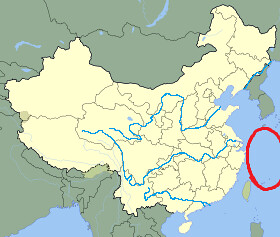
It was a bitter pill for the Democratic Party of Japan (DJP), no matter how they swallowed it. By releasing a Chinese fishing boat captain detained by Japan without a trial, Japanese Prime Minster Kan Naoto was clearly bowing under Chinese pressure. The captain had been arrested by the Japanese coast guard for allegedly ramming his boat into Japanese coast guard vessels while in territorial waters claimed both by China and Japan. The Japanese government appeared to buckle and released the captain to China on Saturday. According to an unnamed official in the prime minister's office quoted in the Asahi Shimbun on Sunday (9/26/2010), "The Chinese could have recalled their ambassador, or cut off diplomatic relations. There was no other possible landing point."

Within Japan this was a shocking turning point in bilateral relations, a sudden strategic victory for a rising China that could lead to many scenarios, including the possibility that China would send fishery administration or even military ships to patrol the waters off the disputed islands and back out of an agreement to jointly develop undersea gas fields in the area. An official in the foreign ministry quoted in Sunday's Asahi, said: "There's no telling how overbearing the Chinese are going to be after this. There’s nothing to be done about it, this will go on for the next twenty years."

The Japanese public seems to have reacted three ways to the release of the captain. One group, the sort who usually read the business-economics newspaper Nikkei Shimbun was undoubtedly relieved to see the government release the captain last Saturday. As Chinese sanctions escalated into the economic sphere, including a stoppage of the export of rare metals to Japan, the worry was that this political spat would seriously effect Japan's increasingly important economic relationship with China. It was this economic group that seemed to be making the decisions in Tokyo last week, hoping that pragmatism and mutual economic interests would prevail. The danger of this view, expressed to me by one Japanese reporter I spoke to, is that in thee economic sphere the Chinese now see Japan as needing China more than China needs Japan, and will continually try to push this advantage on various fronts. Recent strikes against Japanese companies in China are a sign that more economic pressure can be expected.

Another segment of the public, who are more likely to read the relatively liberal Asahi Shimbun, was relieved, but also dismayed. This more internationally-minded group, including many Democratic Party supporters, had hoped for the past few years that Japan and China were actually improving their relations. Now the DPJ's China policy seems to be in tatters. Talk of an "East Asian Community" and a "mutual strategic relationship" seems naive in this tense atmosphere, to say nothing of the rhetoric of "fraternal love" of the previous Prime Minister Hatoyama Yukio. Now, there is a depressing sense that no relief from Chinese pressure is forthcoming. The Chinese government is now demanding an apology and recompense for the trouble caused in the case of the hapless fisherman. This may be perceived in Japan as a signal that the Chinese government has no interest, or perhaps no incentive, in improving relations with Japan. Most troubling of all to the Japanese internationalists, the recent actions against Japan included halting exchanges between school children, and canceling tours to Japan, acts that inflame tensions between the citizens of the two countries at the societal not simply the political level. Many Japanese China-watchers are convinced that twenty years of anti-Japanese education in China (especially under the leadership of Jiang Zemin) have produced an atmosphere in China in which anti-Japanese rhetoric is all-purpose political medicine that the Chinese government can apply to any problem, domestic or foreign. If this is the case, there will be little chance for true detente.

In general the leftist and liberal segments of the Japanese public are worried that China has reacted only tepidly to the efforts of the DPJ to improve relations between the two countries. One of the most baffling acts involved the Chinese navy conducting exercises near Okinawa at about the time Japan was debating the agreement to shift U.S. forces within Okinawa. The Chinese naval exercises seemed timed perfectly to embarrass both the peacenik and pro-China wings of the DPJ, which subsequently beat a retreat to the relative security of the US alliance. The U.S. bases in Okinawa will stay put, and it seems likely that the hawks within the DPJ (a party which includes an extremely broad spectrum of politicians from socialists to rightists) will have a greater say in foreign policy.

Only one group seems genuinely energized by these events. This is the small but loud, and perhaps growing, right wing in Japan. Right wingers in Japan, like the so-called angry youth in China, thrive on Sino-Japanese tensions of any kind. Much of their online rhetoric is racist and dehumanizing, and aimed at stirring up anti-foreigner tensions within Japanese society as well as in Japan's relations with China and Korea. The more rational right wing sees this as a chance to bash the government of Kan, who will likely pay a heavy price for kowtowing to Beijing. The conservative Sankei Shimbun even went after the Asahi Shimbun for not towing a strict enough line on Japanese sovereignty claims for the disputed islands. The mainstream conservative Yomiuri criticized the weakness of the prime minister’s actions as not standing up for Japan’s territorial integrity.

Read in the Western press these events may seem inconsequential. Westerners forget that China and Japan have one of the largest bilateral trade relationships in the world, and profound mutual interests at the societal and political levels. Living as I do between Tokyo and Shanghai, as so many thousands of people do these days (Japanese, Chinese and others), we can only hope that both governments find a way of managing the seemingly irresolvable territorial dispute, and perhaps even return to the policies of engagement that began between the previous Prime Minister Hatoyama Yukio and Chinese Premier Wen Jiabao.

James Farrer is Director, Institute of Comparative Culture, Sophia University, Tokyo, Japan. Photo from huneycuttaddison.