Wednesday, November 24, 2010

Introducing: More Like This

Policy Innovations is pleased to announce the debut of "More Like This," a new article series by our friend John Haffner. John will be profiling clean energy leaders and other green innovators in China over the next several months.

As you can read in his introduction to the series, the motivation is triple: 1. Give these pioneers some of the recognition they deserve; 2. Convey the flavor of life in contemporary China; and 3. Inspire similar leadership in others.

The first article is a frank discussion with Kongjian Yu, an award-winning landscape architect whose designs strive to incorporate energy efficiency and natural beauty.

Yu feels that China's rapid urbanization suffers from what he calls the "'little feet' aesthetic"—showcase buildings built on shaky conceptual foundations. "These ornamental buildings can't carry their own weight. We have little feet but a jumbo body of consumption and GDP growth. Chinese have this dream of being urbanized. But the buildings aren't green."

Also of note on U.S.-China relations is our coverage of "Rare Earths Diplomacy" by Sean Daly. He looks at what we should expect in the rare minerals market and how it could impact production of the wind turbines and hybrid cars we associate with a clean technology economy.

Enjoy, and have a great Thanksgiving.

Thursday, November 4, 2010

Moving to the Japan Society in NY

Dear Friends,

As some of you know, I am leaving Carnegie Council next week to take a senior program position at the Japan Society in New York.

It was a tough decision to leave Carnegie—especially after nearly 5 years of exciting programming and research projects with a fantastic team. Ultimately my decision was formed by a personal desire to help Japan revive.

Over the course of a decade of writing seriously about Asia, my analysis has zeroed in on two empirical sources: data and interviews (rather than theory or conjecture). In my writing on Japan, I have tried my best to convey accurately what Japanese people tell me about their country. As a result, perhaps ironically, the tone of my articles and speeches has become increasingly pessimistic. I recently had dinner with the chief economist of a major bank in Tokyo who asked me, "Devin, what will it take for you to stop being so gloomy about Japan?" My answer was: "I will stop being gloomy when Japanese people stop being gloomy about Japan." It's time to cheer up.

There is an expression in the nonprofit sector: It takes as much effort to find support for a small project as it does for a big one. We might as well aim for the sky. I hope that in a small way at my new post I can help provide a platform for innovation and ideas for positive change in Japan and the US-Japan relationship.

As always, I will look forward to your insights, guidance, and collaboration.

Yoroshiku!

Devin

Photo by William Cho.

Tuesday, October 19, 2010

Kevin Kelly on What Technology Wants

What Technology Wants, Kevin KellyWhen asked at the Carnegie Council why he doesn't use social media such as Twitter, author Kevin Kelly said he is in a phase where he prefers getting to the bottom of things to staying on top of them. Fair enough. After hearing him preview his new tome What Technology Wants, I think he's on to something.

The title is intentionally provocative, though Kelly does not imply that machines are conscious. He more seeks to discover how technology is situated in the universe, how it functions like an organism, with its own tendencies and urges, and thus its ability to exert influence.

Technology, or the "technium" as he dubs our interconnected system of hardware and culture, "wants" something in the way a plant wants sunlight.

These desires are grounded, he believes, in pure physics and are exemplified in a number of trends. While evolution may not be teleological, it does have directionality. So far the indications are that technology wants what life wants (p. 270, emphasis mine):

Increasing efficiency
Increasing opportunity
Increasing emergence
Increasing complexity
Increasing diversity
Increasing specialization
Increasing ubiquity
Increasing freedom
Increasing mutualism
Increasing beauty
Increasing sentience
Increasing structure
Increasing evolvability

Kelly calls these traits "exotropic" because they all tend toward greater organization, as opposed to entropy, which dissipates energy and disorganizes systems.

Does this directionality also have an ethical arrow? Kelly seems to think yes. The key for him is that these processes continuously unlock new possibilities, new choices. If there is a net increase in creation versus destruction of choice, then the world is on balance improving. The ethical obligation is thus to increase technology to unlock global genius so that everybody can express their special mix of talents. The social corollary is that technology exerts a development imperative, albeit a slim one. "The dark side of technology cannot be avoided," writes Kelly. "It may even be nearly half the technium" (p. 79).

The dark side downside can be seen in the persistent, almost tyrannical, wastefulness of technologies such as the automobile. Kelly calculates, for example, that three-fourths of our energy use is to service the technologies themselves. Larry Burns made a similar point at our recent Sustainable Societies panel when he cited the minuscule fraction of gasoline energy that actually moves the passenger to her destination—most of the energy moves the car itself and much is lost as heat. Kelly estimates that cars are about 1 percent effective when seen in this light.

Kelly also touches on the privacy question and thus tangentially on government 2.0—the movement to use data and technology to encourage more efficient and accountable public systems. Clearly there is a trend toward personalization of our media consumption and our devices. Yet total personalization of technology requires symmetrical and reciprocal transparency on the part of the technology providers, or else an imbalance of power results. You could even say that technology wants WikiLeaks, to balance the opacity of national governments and secretive corporations.

Given this taste of his arguments, it seems What Technology Wants will make for a quite interesting read.

Sunday, September 26, 2010

James Farrer on China-Japan Tensions

We are pleased to publish this guest post below from James Farrer on the current tensions between China and Japan:

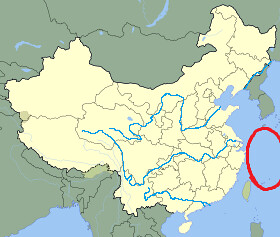
It was a bitter pill for the Democratic Party of Japan (DJP), no matter how they swallowed it. By releasing a Chinese fishing boat captain detained by Japan without a trial, Japanese Prime Minster Kan Naoto was clearly bowing under Chinese pressure. The captain had been arrested by the Japanese coast guard for allegedly ramming his boat into Japanese coast guard vessels while in territorial waters claimed both by China and Japan. The Japanese government appeared to buckle and released the captain to China on Saturday. According to an unnamed official in the prime minister's office quoted in the Asahi Shimbun on Sunday (9/26/2010), "The Chinese could have recalled their ambassador, or cut off diplomatic relations. There was no other possible landing point."

Within Japan this was a shocking turning point in bilateral relations, a sudden strategic victory for a rising China that could lead to many scenarios, including the possibility that China would send fishery administration or even military ships to patrol the waters off the disputed islands and back out of an agreement to jointly develop undersea gas fields in the area. An official in the foreign ministry quoted in Sunday's Asahi, said: "There's no telling how overbearing the Chinese are going to be after this. There’s nothing to be done about it, this will go on for the next twenty years."

The Japanese public seems to have reacted three ways to the release of the captain. One group, the sort who usually read the business-economics newspaper Nikkei Shimbun was undoubtedly relieved to see the government release the captain last Saturday. As Chinese sanctions escalated into the economic sphere, including a stoppage of the export of rare metals to Japan, the worry was that this political spat would seriously effect Japan's increasingly important economic relationship with China. It was this economic group that seemed to be making the decisions in Tokyo last week, hoping that pragmatism and mutual economic interests would prevail. The danger of this view, expressed to me by one Japanese reporter I spoke to, is that in thee economic sphere the Chinese now see Japan as needing China more than China needs Japan, and will continually try to push this advantage on various fronts. Recent strikes against Japanese companies in China are a sign that more economic pressure can be expected.

Another segment of the public, who are more likely to read the relatively liberal Asahi Shimbun, was relieved, but also dismayed. This more internationally-minded group, including many Democratic Party supporters, had hoped for the past few years that Japan and China were actually improving their relations. Now the DPJ's China policy seems to be in tatters. Talk of an "East Asian Community" and a "mutual strategic relationship" seems naive in this tense atmosphere, to say nothing of the rhetoric of "fraternal love" of the previous Prime Minister Hatoyama Yukio. Now, there is a depressing sense that no relief from Chinese pressure is forthcoming. The Chinese government is now demanding an apology and recompense for the trouble caused in the case of the hapless fisherman. This may be perceived in Japan as a signal that the Chinese government has no interest, or perhaps no incentive, in improving relations with Japan. Most troubling of all to the Japanese internationalists, the recent actions against Japan included halting exchanges between school children, and canceling tours to Japan, acts that inflame tensions between the citizens of the two countries at the societal not simply the political level. Many Japanese China-watchers are convinced that twenty years of anti-Japanese education in China (especially under the leadership of Jiang Zemin) have produced an atmosphere in China in which anti-Japanese rhetoric is all-purpose political medicine that the Chinese government can apply to any problem, domestic or foreign. If this is the case, there will be little chance for true detente.

In general the leftist and liberal segments of the Japanese public are worried that China has reacted only tepidly to the efforts of the DPJ to improve relations between the two countries. One of the most baffling acts involved the Chinese navy conducting exercises near Okinawa at about the time Japan was debating the agreement to shift U.S. forces within Okinawa. The Chinese naval exercises seemed timed perfectly to embarrass both the peacenik and pro-China wings of the DPJ, which subsequently beat a retreat to the relative security of the US alliance. The U.S. bases in Okinawa will stay put, and it seems likely that the hawks within the DPJ (a party which includes an extremely broad spectrum of politicians from socialists to rightists) will have a greater say in foreign policy.

Only one group seems genuinely energized by these events. This is the small but loud, and perhaps growing, right wing in Japan. Right wingers in Japan, like the so-called angry youth in China, thrive on Sino-Japanese tensions of any kind. Much of their online rhetoric is racist and dehumanizing, and aimed at stirring up anti-foreigner tensions within Japanese society as well as in Japan's relations with China and Korea. The more rational right wing sees this as a chance to bash the government of Kan, who will likely pay a heavy price for kowtowing to Beijing. The conservative Sankei Shimbun even went after the Asahi Shimbun for not towing a strict enough line on Japanese sovereignty claims for the disputed islands. The mainstream conservative Yomiuri criticized the weakness of the prime minister’s actions as not standing up for Japan’s territorial integrity.

Read in the Western press these events may seem inconsequential. Westerners forget that China and Japan have one of the largest bilateral trade relationships in the world, and profound mutual interests at the societal and political levels. Living as I do between Tokyo and Shanghai, as so many thousands of people do these days (Japanese, Chinese and others), we can only hope that both governments find a way of managing the seemingly irresolvable territorial dispute, and perhaps even return to the policies of engagement that began between the previous Prime Minister Hatoyama Yukio and Chinese Premier Wen Jiabao.

James Farrer is Director, Institute of Comparative Culture, Sophia University, Tokyo, Japan. Photo from huneycuttaddison.

Wednesday, September 22, 2010

Cyber Nationalists or Critical Netizens?

Yifan Xu reports for Policy Innovations on a survey of Chinese Internet users.

Is the Internet spreading and intensifying nationalism among the Chinese public? A nationwide opinion survey conducted in 2008 by the Research Center of Contemporary China sheds some light on the issue. Respondents were asked to indicate their level of agreement with nationalistic statements such as "the world would be a better place if people from other countries were more like the Chinese," and nationalist policies such as "China should limit the import of foreign products in order to protect its national economy."

The results show that Chinese netizens with higher education and income levels are less likely to be nationalistic and are less supportive of protectionist policies. In particular, for the statement "the world would be a better place if people from other countries were more like the Chinese," using the Internet decreases the probability of agreement by 10.7 percent; expressing oneself online reduces the probability of agreement by 10.3 percent; and using government websites reduces the probability of agreement by 17.6 percent.

This suggests that the old cyber-libertarian dream of the Internet serving as a catalyst for political reform may still have some elements of truth. At least the Chinese Communist Party must think so, given its extensive censorship of the Internet.

When Google withdrew its business from China in early 2010, Chinese netizens made a few sarcastic comments comparing the CCP's Internet censorship with the "closing door" policy of the Qing Dynasty—just like the Qing governors struggled to maintain the great Chinese Empire, the CCP is trying to create a "great Chinese Intranet." The CCP's logic is simple: the Internet makes possible negative information and news about the Party, which was previously unavailable from the traditional mass media.

In recent years, Chinese political dissidents have been actively using the Internet to reach out to ordinary people as well as foreign populations. For instance, while human rights activist Hu Jia was under house arrest, he remained active via emails and blogs, and posted a series of video diaries on YouTube. The Internet is in fact thick with opinions from nationalists and anti-nationalists alike.

The most interesting survey finding is that people who have used the Internet to access a government website—to get information, make a comment, or lodge a complaint—are even less likely to be nationalistic. This could be a spillover effect from dissatisfaction with the government.

The August 2010 Zhouqu landslide provides an interesting contrast. Generally speaking, disastrous events cause a nationalistic surge. In the 2008 survey, following the Wenchuan earthquake, respondents were more likely to agree with nationalistic statement. Yet the Zhouqu landslide has led to wide criticism of the government online. Netizens accused the government of working harder to promote a positive image of itself than to mount an effective rescue effort.

As New York Times columnist Nicholas D. Kristof observed in 2002, nationalism in China is a double-edged sword: "it has potential not just for conferring legitimacy on the government but also for taking it away." Armed with personal computers, critical netizens are able to quickly spread anti-nationalist discourse and protests in a decentralized fashion. Should that happen in China, the cyber-libertarian dream may materialize.

[PHOTO CREDIT: March oh! (CC).]

Friday, September 17, 2010

Kei Hiruta on Japan's Political Philosophy Boom

We are pleased to publish below a guest post by Carnegie-Uehiro Fellow Kei Hiruta.

Observers of Japanese society may be surprised to see an emerging interest in political philosophy in Japan. Mainstream newspapers and popular magazines have been busy interviewing philosophy professors; and bookstores across the country are holding or planning to hold philosophy book fairs. Why is this happening and what is the likely outcome?

The cause of this boom is thanks to Harvard professor Michael Sandel. His renowned lectures at Harvard were recently broadcast on NHK (Japan Broadcasting Corporation) and turned out to be enormously popular. The Japanese translation of his book, Justice: What's the Right Thing to Do? has sold about 400,000 copies since its publication in May 2010, and his visit to Japan in late August was enthusiastically welcomed. Yet the boom is more than a Sandel boom; he may be an academic superstar, but he isn't the only actor in the drama.

The kind of political philosophy Sandel exemplifies is indeed new to most of the populace. The relevant distinction here is not so much between Japanese and Western philosophy but between Continental and Anglophone. Because of the strong and persistent German influence over the humanities and social science in Japan, joined by the popularity of postmodern theoretical literature in the last three decades, the analytical and normatively-oriented mode of philosophizing—so familiar to those based at Harvard, Oxford, St. Andrews, or Australian National University—strikes the Japanese audience as refreshingly down-to-earth. In his lecture at the University of Tokyo, Sandel asked whether it is fair that the Major League Baseball player Ichiro Suzuki should be paid 42 times more than the President of the United States or 400 times more than the average Japanese school teacher. This surprised and excited those who had thought that political philosophers would always ask fanciful and impractical questions such as, "What does Karl Marx mean by commodity fetishism?"

The political philosophy boom, like all booms, promises too much. In a recent special issue of the popular magazine Weekly Toyo Keizai, the discipline is reported to offer guidance on tackling various problems, including Japan's continuously high suicide rate and the uncertain future of capitalism. Yet psychologists are better qualified to address the first problem, and political philosophers are as clueless as economists about the second one.

Does this mean that the boom will be followed by disillusionment? Perhaps. A boom brings opportunities to make money, and bad philosophy is already piling up in the market to drive good ones out. If this trend continues, the boom will turn into a bubble.

That would be an unfortunate end of the story because the Japanese have a wide range of social and political issues that can be illuminated by philosophical reflection. Should we abolish the death penalty? Should we accept more immigrants? How should a country deal with historical injustices? Does gender equality require a legal right for a married couple to have different surnames? How should we control pornography without unduly restricting the freedom of expression? These are but a few samples of the issues that have long been on the Japanese political agenda and yet are still in want of reasoned argument. This, without exaggeration, is what political philosophy is able to offer.

What the current boom shows is that ideas are in demand in Japan to assist people to consider, both individually and collectively, how to live in a society where the "second lost decade" seems like it will be followed by a third one. We have every reason to hope that the demand will be met and the boom will turn into something more enduring. Whether the hope will come true is yet to be seen.

Kei Hiruta is Carnegie-Uehiro fellow at the Carnegie Council for Ethics in International Affairs and a research associate in the Uehiro Centre for Practical Ethics at Oxford University.

Monday, August 9, 2010

Alexandra Harney on the Mummification of Japan

Our friend Alexandra Harney has given us permission to repost a piece called "The Mummification of Japan," which she wrote in her blog The China Price during her recent trip in Japan:

I'm in Osaka this weekend to appear on Yomiuri TV's Wake Up Plus, that rare beast: an intelligent TV show. The story of the moment in Japan is the nationwide hunt for missing centenarians, following the discovery of a modern-day mummy in his bed, 30 years after his death. Officials suspect that a relative did not notify the government of his passing in order to receive the man's benefits.

For the moment, the debate in the Japanese media (including Wake Up Plus) is focused on three main elements: the government's failure to detect which of its benefit-receiving citizens are living and which are dead; the Japanese tendency to leave family matters to the family; and the fact that Japan's privacy laws hinder investigations into this kind of fraud. To me, the tenor of the debate itself reflects Japan's self-flagellating tendency to blame the government and politicians in the first instance.

The fact is that these missing pensioners are a reflection of how deeply and painfully Japan's long stagnation has affected its oldest and youngest citizens. Trite as it sounds, I'll recount a conversation I had with a taxi driver here in Osaka yesterday: at 65, he receives about US$1200 a month in pension benefits from the government. His rent accounts for half of this, and after utilities, his cell phone bill and food, there isn't much left. So he continues to work as a taxi driver, taking home about $1800 a month. (One might wonder how he is allowed to work while receiving public benefits, but the benefits, like the minimum wage, were not meant for people to depend on entirely, I believe.) $36,000 a year isn't bad by global standards, but consider that this man might live for another 30 years and this is as good as it will get for him. While he is clearly putting money aside for his retirement, he expects he will have to move into a smaller apartment when he retires. This is not the fancy globe-trotting retirement that I, at least, had imagined for Japan.

While we hear much talk about China getting old before it gets rich, Japanese people are getting poor before they get old. Younger Japanese will not receive the $1200 a month that that taxi driver gets; they will likely receive much less.

Putting aside the fact that pension fraud is a crime, one larger issue behind these missing old people and their mummified remains is that younger Japanese need to rely on their parents' retirement benefits because the economy is not providing sufficient job opportunities.

Every trip to Japan is more depressing than the last these days; I stay in hotels that will, without the help of big spending Chinese tourists, likely lay fallow, listen to music from pianos that play themselves, pass through ghostly tourist districts designed for a wealthier country. Japan is no longer the country it once was. Policymakers in other rapidly aging countries (and those that struggle to create new jobs, like the US) should take notice.