Showing posts with label development. Show all posts

Monday, March 7, 2011

Drops Not Drones, Vaccines Not Marines

You are likely to be judged by the company you keep. In Osama bin Laden's case, the isolated mountains of tribal Afghanistan and Pakistan provide a perfect safe haven for him and for polio. Thirty years of conflict and low economic development have resulted in security and health infrastructure that is inadequate for deploying an effective regional eradication program. Thus the Af-Pak borderlands remain one of only a handful of places (including India and Nigeria) where polio is endemic, though flare-ups also occur across Africa and Central Asia due to importation.

As the Afghan war moves into its tenth year and intensifies to ten airstrikes per day, the time is beyond ripe to question whether we're packing the right payload. The United States spends more than $100 billion per year executing the war in Afghanistan, while Afghan GDP is around $15 billion. Clearly this is unsustainable.

Compare this to the figures required for global health and development. Bill Gates said recently that $2 billion is needed for polio eradication over the next two years, while the campaign is currently experiencing a $700 million shortfall. In a speech at the former Roosevelt home in New York, Gates delivered his annual foundation letter in which he outlines his strategy for charitable giving. Polio eradication is the key focus this year, and his rationale centers on four points:

1. We are close to eradication: There are only about 1,000 cases left per year globally;
2. Eradication will permanently free up resources for other vaccination and health campaigns;
3. The affected regions will benefit in terms of economic productivity; and
4. Eradication will provide a motivational victory for the health industry, driving further hope and investment.

As polio is just one affliction of poverty among many, it's important to consider the opportunity costs. Critics such as D. A. Henderson, the leader of the team who eradicated smallpox, feel that dumping billions into polio eradication is a misallocation of funds. Polio is difficult to kill because of a number of combined factors: the variety of strains, asymptomatic carriers, a vaccine that is not 100 percent effective, parental refusal, a lack of infrastructure, and management problems in organizing all the national campaigns. It is very much a door-to-door endeavor, but so was smallpox eradication.

THE GATEWAY IMMUNIZATION

A point in favor of financing polio eradication is that the vaccine can be viewed as a gateway process leading to routine immunization services for more common diseases. One-fifth of children today don't have such access. Beyond the obvious health consequences, lack of access also presents an organizational problem in the fight against polio because it leads to underreporting and thus keeps the virus elusive.

There is also the issue of innovative and appropriate technologies: Something as simple as camel-portable refrigerators could go a long way toward keeping vaccine doses fresh. If the U.S. military is deploying innovative solar modules to replace the generators that power air conditioning at its forward operating bases in Afghanistan, then clearly some of these technologies can be repurposed for more benign operations.

THE MORAL DIMENSION

At the Bill Gates event, David Oshinsky, author of Polio: An American Story, said we need to motivate a new March of Dollars to "get kids interested in the moral dimension" of helping other kids around the world. The original March of Dimes organized by the National Foundation for Infantile Paralysis was able to finance research for the polio vaccine through a flood of small private contributions.

But it was much easier to motivate Americans to donate when their classmates were leaving behind empty school desks. Gates attributes the moral gap today to this physical proximity problem. Even with his computer software stitching the world together, polio mostly kills and maims people outside the eye of the rich world's collective consciousness. Few things illuminate the power and puzzle of globalization more than the world's richest man reaching out to help some of the poorest. His ethical sense drives him to do it.

COALITION OF THE HEALING

Gates has collected allies along the way. The British government has pledged to double its funding to $60 million from $30 million as a matching grant conditional on contributions from other donor governments. Sheikh Mohammed bin Zayed al-Nahyan of Abu Dhabi recently contributed $50 million, and the government of Pakistan announced an emergency response to the increase of cases in its territory.

So whose side are we on? In one corner we have Robert Gates and the U.S. Department of Defense dropping bombs from drones. In the other corner we have Bill Gates asking the world to spend more to save the most vulnerable. Send in the vaccines, or send in the Marines. It's a pretty stark simple choice.

[PHOTO CREDIT: Gates Foundation (CC).]

Thursday, December 9, 2010

Reinventing the Wheelchair

Reading Scientific American this morning I spied the innovation that won their annual World Changing Ideas Video Contest: the Leveraged Freedom Chair designed by MIT Mobility Lab.

It's a three-wheeled human-powered wheelchair that goes faster than normal and also navigates difficult terrain—rutted roads, cobblestones, trash-strewn slums. The genius resides in the vertical hand levers: Users simply grab higher or lower depending on how much torque or speed they need. It's like being able to change gears.

The drivetrain consists of common bicycle parts and so is "manufacturable and repairable anywhere in the developing world," according to MIT. Sometimes low-tech solutions are the most appropriate.

Friday, January 29, 2010

ACDC 2010 Call for Papers

Fourth Annual Conference on Development and Change
Johannesburg, South Africa, April 9–11, 2010

Conference Theme
The world economy is currently in the throes of a global economic crisis reminiscent of the great depressions of the 1930s and possibly that of the 1870s. As back then, the crisis resulted from major structural imbalances in financial and credit markets ultimately resulting in a retreat from free trade. Emergent debates about resurgent protectionism, alternative reserve currencies, stimulus packages and climate change policies suggests that the world economy has entered a phase of heightened change which will transform the development "equation" in varied and diverse ways. It is imperative at this time that development economists should engage with two crucial questions: the implications of these changes for the developing world and the prospects for "development" for the majority of people in the developing world.

The forthcoming conference invites submission of academic papers representing original and critical research focusing on the various aspects of the current global economic crisis. Papers are encouraged to employ historical and comparative perspectives where possible, on the impact of the current global financial and trade crises and its impact on the economic performance of developing countries. A focus on policy relevance and prescriptions for developing countries is highly recommended.

Contact conference director Ashwini Deshpande or visit Policy Innovations to download the full details. The deadline has been extended to February 10, 2010.

Thursday, January 28, 2010

Aid and Technology Innovation Intersect for Haiti

I sat in on a conference call today with Forum One and OneWorld U.S. concerning the use of technology to direct earthquake relief and recovery funds to Haiti. There were some innovative orgs on the line, many of which have already been covered extensively in the media, so I'll just summarize some of the main points here.

Michaela Hackner of Forum One emphasized the transformation we're witnessing as charities reach out to people online and through their mobile devices. She said the crux of the new paradigm is money, connections, and awareness. You could also add speed: Michaela cited stats from the Red Cross indicating that they raised $10 million in 48 hours via text-message donations.

There is also software springing up to assist aid workers, such as the Ushahidi Haiti map, and a Creole translation app emerging out of Crisis Camp. Of course with the new frontier that digital technologies make possible there is also room for abuse, such as the false rumor that American Airlines would be donating relief flights.

Michaela's key conclusion was that humanitarian and development aid and technology innovators need to get in the same room to understand challenges and share data. This would not only make the current response more effective, but could also help with longer-term questions of planning, transparency, and sustainability.

Andy Carvin of NPR presented a high-resolution map of Port-au-Prince that volunteers have helped build from satellite imagery, tagging hospital locations and other useful data. He said the map is downloadable to GPS devices for navigating the city. He also mentioned the Google People Finder tool, which the State Department has embedded on their website.

Jacob Colker of The Extraordinaries described a crowd-sourced system whereby global volunteers help process missing persons data from their home computers. Haiti earthquake images are pulled from news stories and Flickr and uploaded to a system where volunteers tag the photos with various characteristics—female, living, etc.—to populate a search engine. Matches in the search engine are then used to try and identify or connect people on the ground. He said that of 750 potential matches generated this way they had tried to reach out to 60 families, but had found it very difficult to get in contact.

Clearly some of these collaborations and projects are in early stages and rapid response mode, but there is a lot of potential for funding long-term, innovative crisis management strategies and technology infrastructure.

[PHOTO CREDIT: Georgia Popplewell (CC).]

Tuesday, January 19, 2010

Good Practices in Disaster Relief, and Where to Donate

In the rush to save lives after the Haiti earthquake, Edward Brown, relief director for the Christian humanitarian organization World Vision, discusses how to handle some common misconceptions concerning disaster relief.

Blankets, shoes, and clothing are not a cost-effective way to help

The cost of shipping these items from around the country—let alone the time it takes to sort, pack and ship them—is prohibitive and entails much higher cost than the value of the goods themselves. World Vision has relief supplies already stocked in disaster-prone countries as well as in strategically located warehouses around the world. World Vision had supplies pre-positioned in Haiti in preparation for hurricane season, which allowed the agency to respond immediately to last week's earthquake.

These supplies are designed to meet international standards for humanitarian relief and are packaged up and ready to deploy as soon as a crisis strikes. Cash donations are the best, most cost-effective way to help aid groups deliver these life-saving supplies quickly, purchase supplies close to the disaster zone when possible and replenish their stocks in preparation for future disasters.

Send cash, it will get there

Reputable agencies send 80 percent or more of cash donations to the disaster site; the rest is invested in monitoring, reporting and other activities that facilitate transparency and efficiency in their operations, as well as in sharing information with those who can help. Donors have a right and a responsibility to ask aid groups how they will be using those donations, and what will be done with donations raised in excess of the need. Transparent and effective organizations will readily provide that information.

Don't travel to volunteer unless you have specific disaster relief skills

While hands-on service may feel like a better way to help in a crisis, disaster response is a highly technical and sensitive effort. Professionals with specialized skills and overseas disaster experience should be deployed to disaster sites. Volunteers without those skills can do more harm than good, and siphon off critical logistics and translations services. Qualified disaster professionals ensure that help is delivered effectively, safely and efficiently.

Hasty international adoptions of children are not recommended

Hearing about the specific needs of children often sparks a desire to adopt children who seem to have lost their families. However, early in a crisis, children need to be protected, but should remain in their home countries until authorities can confirm the locations of their family members and explore adoption possibilities within their own communities and cultures. International adoption may be the best solution for some children, but it is too early to know for sure in the first weeks of a crisis.

People are resilient in the face of natural disasters

Even in the poorest countries like Haiti, people often reveal a great deal of inner strength and often show a resourcefulness that can save lives. While support and aid are necessary, the Haitian people are by no means helpless.

--------------
WHERE TO DONATE

For more information about how you can assist the Haiti relief effort, Charity Navigator, Google, and the Huffington Post have all assembled lists of organizations that are accepting donations and distributing aid.

[PHOTO CREDIT: United Nations Development Programme (CC).]

Friday, October 30, 2009

Stimulus, Justice, and Business in Greening the Developing World

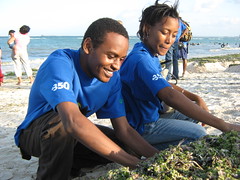
I attended a business leaders luncheon last week organized by the United Nations Association around the idea of Greening the Developing World: Tech's Leading Role (Siemens and TIME co-sponsored). Among the themes one stood out: "Experiment on us!" This came from Minister Modest Mero of Tanzania. He indicated that Africa is an investment opportunity where clean energy pilot projects can take root because they don't have to fight the inertia of creative destruction common in rich countries.

But what is the policy and political landscape for greening development? Robert Orr, the Assistant Secretary-General for Strategic Planning and Policy Coordination, explained the relevance and success of the Clean Development Mechanism in this area. About half of new energy demand and development will be in poorer countries, he said, where 2 billion people live without modern energy access or technology. About one-third of CDM projects to date have involved technology dissemination to these countries.

Orr also made the point that it might be more useful to speak generally of "technology dissemination" instead of "technology transfer." He described the latter as too much of a 1960s–70s term. Recasting the process in this light would help account for co-development, PPPs, and other projects. (While I understand his pragmatic bent here, it does seem to gloss over the justice questions at stake in climate change.)

The CDM for all its faults [PDF] is not an insignificant pool of resources, and lessons have been learned from early implementation efforts. In 2006 some $25 billion was dedicated to projects in the CDM pipeline, $5.7 billion of which went to renewable energy and energy efficiency. But it should have come as no surprise for the UN to learn that money has flowed to the biggest, most profitable projects. As Orr acknowledged, about 80 percent of the projects have occurred in just five countries: Brazil, India, China, Mexico, and the Republic of Korea. Forty-nine other countries account for only 1.5 percent of CDM projects, showing a great need for equity and capacity-building. Orr explained that the UN role should be to help harness the power of the market in a formula that ensures full participation for access to energy.

On the topic of climate ethics, Ambassador Hardeep Singh Puri of India was asked to explain why the West should help countries like India that are its industrial competitors. He answered that you can't solve global climate change without them! He also offered a somewhat rhetorical question of his own: Should the West give to the poorest countries but not to India? Puri estimated that there are more people living in India at the poverty level of the Least Developed Countries than there are total people living in those LDCs.

He said that countries like India offer potential not only as laboratories for new clean energy projects, but also as new markets for green technologies. He stressed that these investments should occur within the existing intellectual property regime (a point also expressed in Sen. John Kerry's Clean Energy Jobs and American Power Act [PDF]). "Accessing technologies" would mean paying for patents, but at affordable rates to promote dissemination of clean technologies. Relying on philanthropy and altruism will go nowhere, he said.

Puri cited renewables and even nuclear as the green technology needs of India, since India still relies heavily on fossil fuels. Biofuels are a non-starter for India in the short and medium term because of land and water shortages, concerns about food security, and commodity price volatility. Puri instead would like to see an increase in public-funded R&D projects that can lead to technology dissemination that also maximizes the common good.

Glenn Prickett of Conservation International broke implementation goals down into three priorities: Efficiency, Forest conservation, and Renewable energy. He cited a McKinsey study [PDF] showing that progress in those areas could account for 75 percent of the global emissions reductions needed by 2020, at a net savings of $14 billion! Of course, this would entail a 50 percent reduction in tropical deforestation, and one roadblock is that public investment in forestry, agriculture, and land-use policies has been dropping.

Energy efficiency solutions, according to Prickett, can be driven by effective standards backed by institutions for enforcement. He pointed out that one of the best ways an "awakening" private sector can contribute is through supply-chain analysis and waste reduction. On a related note, the Kerry climate bill also calls for a voluntary "national product carbon disclosure program," to be based on a review of existing and planned standards such as Carbon Trust's Publicly Available Specification 2050, standards to be developed by the World Resources Institute and the World Business Council for Sustainable Development, and those of the International Standards Organization.

A question was posed to the panel about why the interaction of climate change and land-use issues has been neglected relative to renewables and other investments. Orr responded that food security must be tackled in tandem with climate change, and that technology transfer for adaptation projects that deal with land use could yield huge advances at low cost. Ambassador Puri turned to the case of India, where he said 60 percent of the country lives in rural areas but only 20 percent of the country's GDP comes from agricultural investments. Why the underinvestment? Subsidies in the rich countries! Puri indicated that it's impossible to disentangle climate solutions from the inequities and stagnation of other negotiations such as the WTO Doha Round.

Indeed it is these systemic complexities and inequities that most plague the path to agreement in Copenhagen. But there is nonetheless climate solidarity that transcends national barriers, as evidenced by the massive global call to action organized by 350.org on October 24. As I wrote recently, solving climate change has great potential to serve as an organizing principle for Green Diplomacy, in a way that solves geostrategic, security, and development concerns. But it also has the potential to be a Global Green Stimulus, at a time when developing countries have been further battered by the financial failures of rich nations. Administering much of this stimulus in the form of mitigation grants or an adaptation fund is key to answering the major questions of global environmental justice.

[Photo credit: 350.org action on the beach of Dar es Salaam, Tanzania (CC).]

Thursday, October 29, 2009

America Shouldn't Blow an Opportunity for Green Diplomacy

Among all the talk about soft power and smart power something big and obvious has been missing: wind power. By not being a global leader on climate change over the past decade America has blown a major opportunity to engage in Green Diplomacy—the strategic use of clean energy projects to boost development and security in poor countries. Going forward, the Obama Administration should articulate and carry out a plan to align several of our national priorities: innovation, emissions reduction, development, diplomacy, and security.

When it comes to linking climate change and security it is common practice to trot out the specter of mass hordes of climate refugees inundating rich countries as their own coastal homelands disappear into the ocean. Likely this fear suffers from a case of xenophobic exaggeration. But an already-porous migration policy does motivate the United States to focus on the development of climate-resilient countries in its own hemisphere first. Fortunately a demonstration project exists in the region: Costa Rica, where reforestation and renewable energy combine in a national commitment to becoming carbon neutral.

One can envision the United States helping clean energy best practices radiate out from there, facilitated by domestic and international regulation. Thus it is heartening to see funding and institutional priorities coalescing around these goals in Sen. John Kerry's recently submitted Clean Energy Jobs and American Power Act [PDF]. The bill calls for establishment of a Strategic Interagency Board on International Climate Investment, to be composed of the secretaries of State, Energy, Treasury, Commerce, and Agriculture, the administrators of USAID and the Environmental Protection Agency, and any other relevant officials the president sees fit.

The SIBICI's task would be "to provide United States assistance to developing countries to develop, implement and improve nationally appropriate greenhouse gas mitigation policies," including preparation for participation in "markets for international offset credits for reduced emissions from deforestation." The bill also calls for the State Department to establish an International Clean Energy Deployment Program that would distribute funding either as bilateral assistance, to multilateral funds or institutions formed pursuant to the UNFCCC, or some combination of both. Similar funding would also be distributed under the International Climate Change Adaptation and Global Security Program to "provide assistance to the most vulnerable developing countries... in a way that protects and promotes interests of the United States."

The bill goes on to specify the details for emissions allowances and international offset credits, but much is also left open-ended to ensure that the executive branch has enough latitude to create and carry out these new programs. This bodes well for putting Green Diplomacy in the American power toolbox.

[Photo credit: Volcan Arenal, by Arturo Sotillo (CC).]